Recycling and Sustainability for Commercial Waste Barkingside
Creating an eco-friendly waste disposal area in Barkingside
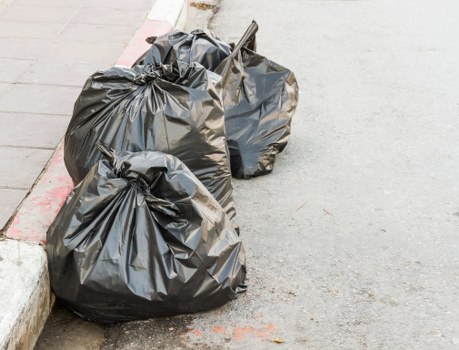 Commercial Waste Barkingside is committed to building an eco-friendly waste disposal area that supports local businesses, reduces landfill and improves resource recovery. Our sustainable rubbish area approach focuses on practical separation at source, efficient collection and a clear route to reuse, repair and recycling. We set an ambitious recycling percentage target to drive measurable progress while aligning with borough waste strategies and local environmental goals.
The London Borough approach to waste separation informs our methods: many businesses in the area separate glass, paper and cardboard, food waste and residual streams, and we work to make that process simple and scalable. Commercial waste in Barkingside often contains mixed dry recyclables and organics; our systems encourage clear on-site segregation, prominent signage and regular staff training to maximise capture rates.
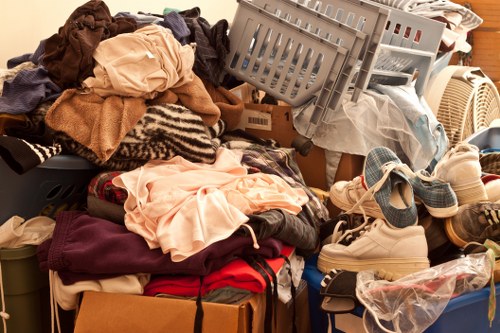 We coordinate collections with nearby material recovery facilities and local transfer stations to keep collections low-emission and highly efficient. By routing loads through appropriate transfer hubs, the Barkingside commercial waste services network minimises double-handling and ensures recyclables reach the correct sorting lines or anaerobic digestion plants. Partnerships with municipal transfer stations and regional MRFs help keep recycling streams clean and market-ready.
Partnerships with charities and reuse organisations are an important strand of our sustainable rubbish area model. We work with community groups and nonprofit partners to divert usable items — furniture, textiles and working electrical equipment — from the waste stream into social reuse channels. These collaborations reduce disposal costs for businesses and help local charities receive donations that would otherwise be sent for disposal.
 Our fleet strategy is focused on emissions reduction. We operate a mix of low-carbon vans and low-emission vehicles for collections across Barkingside and surrounding neighbourhoods. The use of electric and hybrid vans for short urban rounds drastically lowers particulate emissions and noise, making collections compatible with residential and mixed-use areas. Commercial rubbish Barkingside is therefore collected with both operational efficiency and air quality improvement in mind.
To drive continuous improvement we have set a clear recycling percentage target: a borough-aligned goal of 65% recycling of commercial waste by 2030. This target covers recycling, composting and reuse, and is supported by annual audits, performance dashboards and targeted interventions for higher-risk waste streams. Where contamination threatens recovery rates we deploy additional education, colour-coded containers and segregated pick-ups.
Practical recycling activities relevant to the area include business-level sorting for dry mixed recyclables, source-separated food waste for anaerobic digestion, and designated routes for WEEE and bulky items destined for refurbishment. Suggested segregation streams we prioritise include:
- Paper and cardboard — baled or boxed for the MRF
- Plastics and metals — rinsed and separated where possible
- Glass — collected in secure containers to prevent breakage
- Food and organic waste — diverted to AD or composting facilities
- WEEE and textiles — channelled to charity partners or specialist recyclers
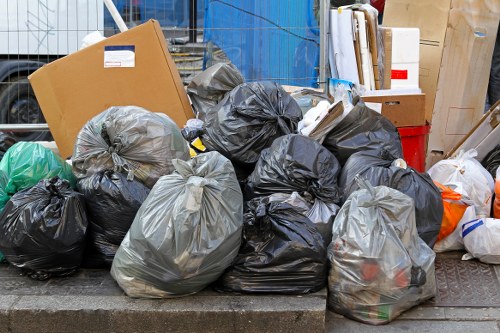 On-site sustainable rubbish areas are designed to be safe, accessible and visually tidy: covered bays for weather protection, clearly labelled recycling and residual containers, and compacting solutions for dense waste streams. These areas reduce litter, improve hygiene and make collections faster and cleaner. We promote small behavioural changes in businesses — like single-stream contamination checks and lightweight staff briefings — that collectively enhance recovery rates.
Next steps for businesses and the borough
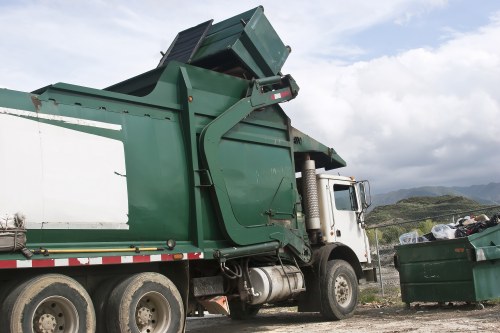 Commercial Waste Barkingside aims to be a local exemplar for sustainable commercial waste management. By combining strategic targets, collaboration with transfer stations, charity partnerships and a low-carbon vehicle fleet, we create a resilient system that benefits local commerce and the environment. Businesses can support the transition by committing to separation at source, agreeing clear collection days and participating in reuse initiatives with recognised partners. Together we can transform commercial waste into a valuable resource, reduce carbon emissions from collections and deliver a cleaner, greener Barkingside.
